
Seared Salmon with Dill Yogurt Sauce and Greek Salad

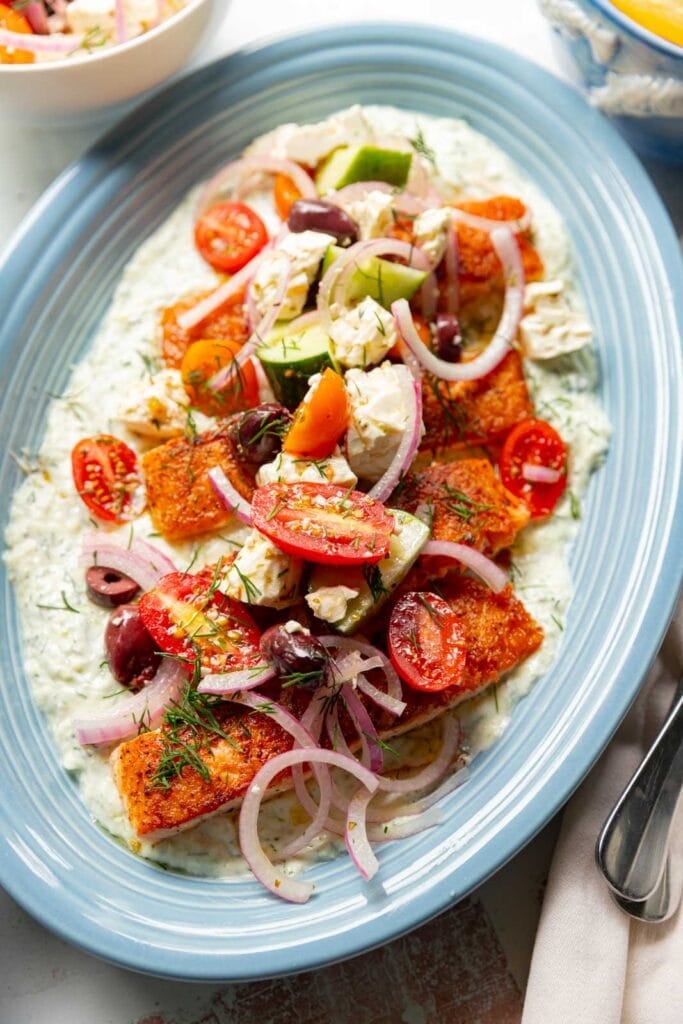
This Seared Salmon with Dill Yogurt Sauce is beautiful enough to serve to friends and easy enough for a Tuesday night dinner with your family! A golden-crusted salmon fillet sits on a smear of cool, garlicky dill yogurt sauce alongside a bright, briny Greek salad with a thick slab of feta on top. AND it comes together in 40 minutes! How easy is that? Share with everyone you love because this is delicious!
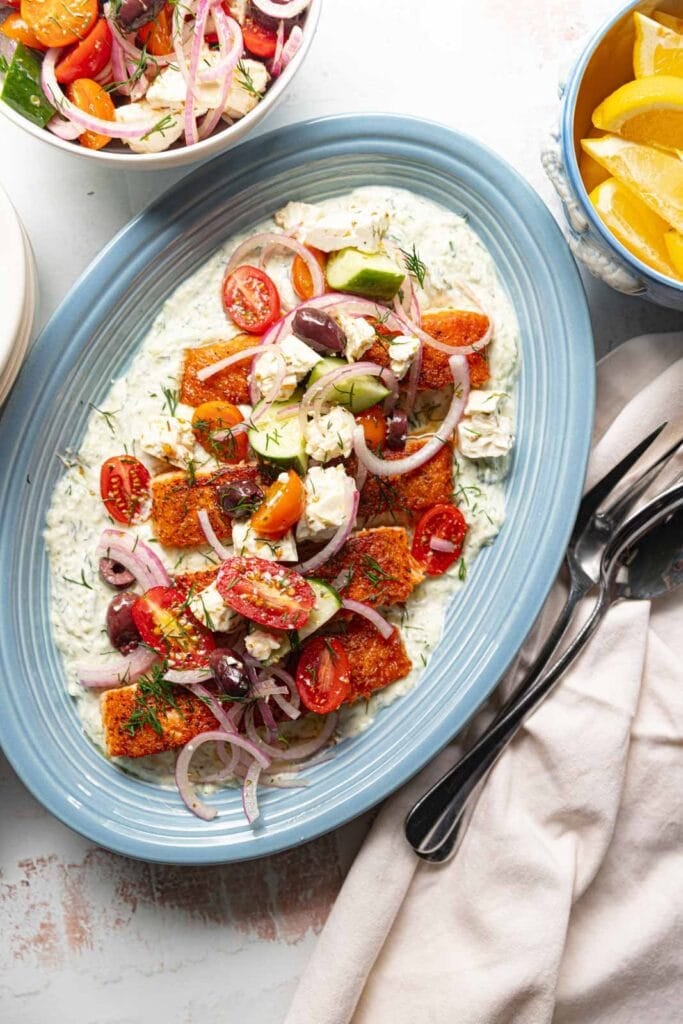
I love Greek flavors; the brininess, the freshness, the way everything on the plate just belongs together! As someone who has been cooking seafood for years, I’m always looking for new ways to serve salmon that feel genuinely elevated, and this one is so special to me because of something we don’t talk about enough; temperature contrast. We think a lot about salt, fat, acid, and heat, but the cool, creamy yogurt sauce against the hot, golden-crusted salmon is a textural temperature bomb that I just love! It makes every single bite more interesting. If you love salmon, you’ll also want to try my Slow Roasted Salmon with Spring Risotto, Baked Salmon and Potatoes with Patatas Bravas Sauce, and Pesto Shrimp Spaghetti with Burst Tomatoes.
Ingredients Notes
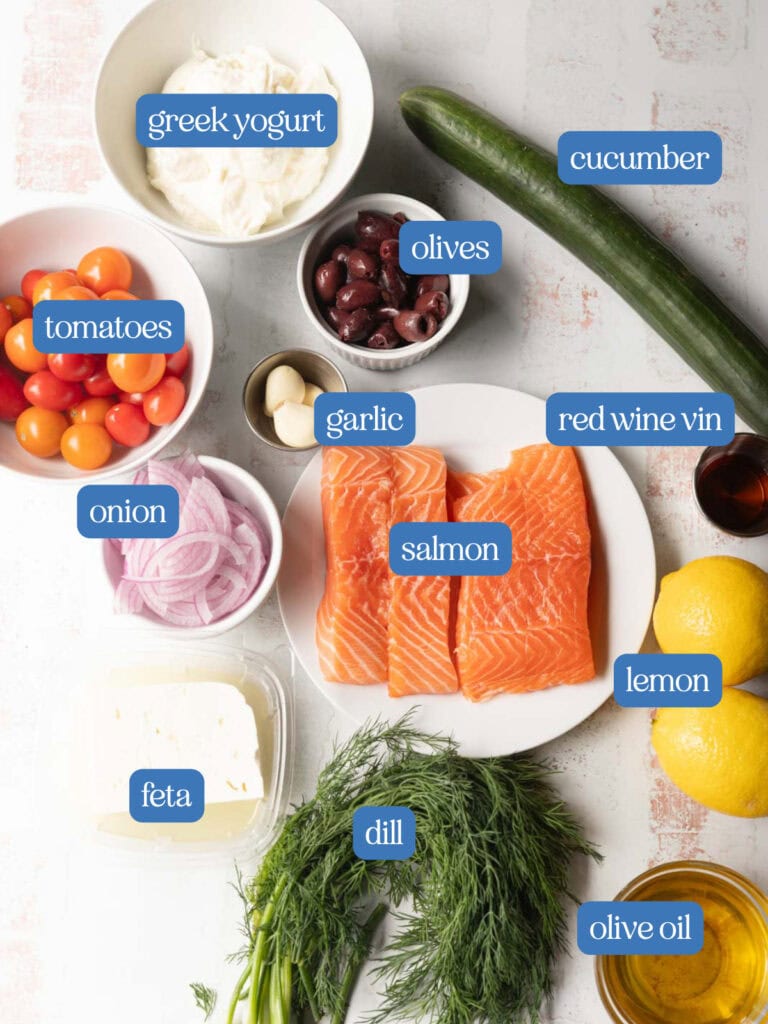
For the yogurt sauce, squeeze the grated cucumber firmly in a kitchen towel before it goes in; cucumber holds a ton of water and if it goes in wet the whole sauce will be runny. Hold the lemon zest and juice until just before serving so it stays bright and fresh. For the salad, buy a block of feta packed in brine and serve it as a thick slab; pre-crumbled feta is a completely different ingredient and it shows. And for the salmon, always ask for center-cut fillets that are as even in thickness as possible; an uneven fillet means one end is overcooked by the time the other is done!
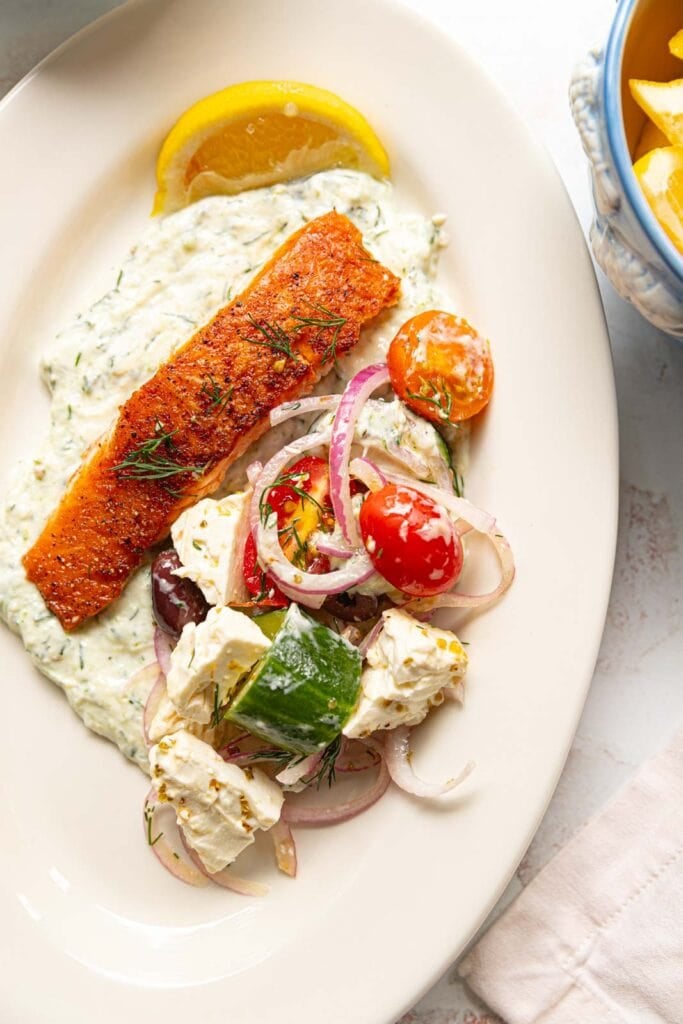
A Note on the Salmon Sear:
If I could teach everyone just one thing from this website, it’s this: patience! Whether it’s salmon, chicken, scallops, or steak, you need to let the meat sear. Give it time! The crust forms, then it lifts naturally and you can flip without it sticking. That’s it. That’s the secret!
There are four things that’ll determine whether your salmon is perfect or disappointing, and none of them are complicated:
- Dry the fillets completely. Both sides, thoroughly, with paper towels. Any surface moisture means steam, and steam means no crust. This is the single most important step and it takes 30 seconds.
- Get the pan properly hot. The oil should be shimmering and just beginning to smoke before the fish goes in. A pan that isn’t hot enough will cause the fish to stick and steam rather than sear.
- Don’t move the fish once it’s down. Press each fillet gently but firmly for the first 20-30 seconds to ensure full contact with the pan, then leave it alone. Skinless fillets will try to curl as the proteins contract; that initial press prevents it.
- Baste with butter at the end. Add butter after you flip, tilt the pan, and spoon the foaming butter continuously over the flesh for 60-90 seconds. This carries heat evenly over the fish without overcooking it and gives you that gorgeous golden finish.
How to Salmon with Yogurt Sauce
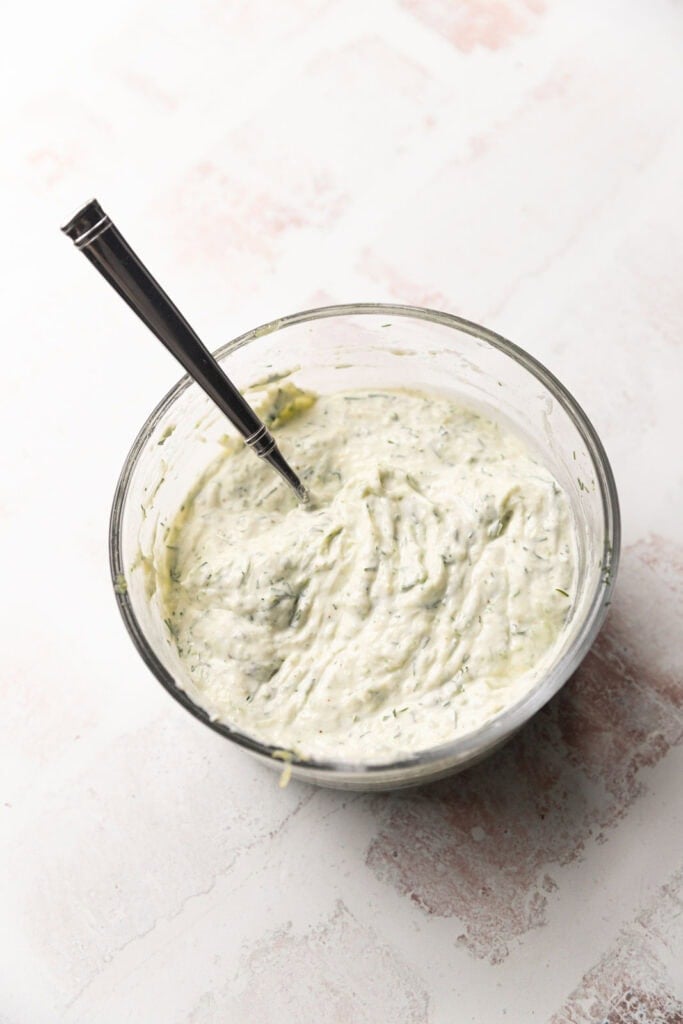
- Grate and squeeze the cucumber dry, combine with yogurt, garlic, dill, olive oil, and salt, and set aside. Add lemon zest and juice just before serving.
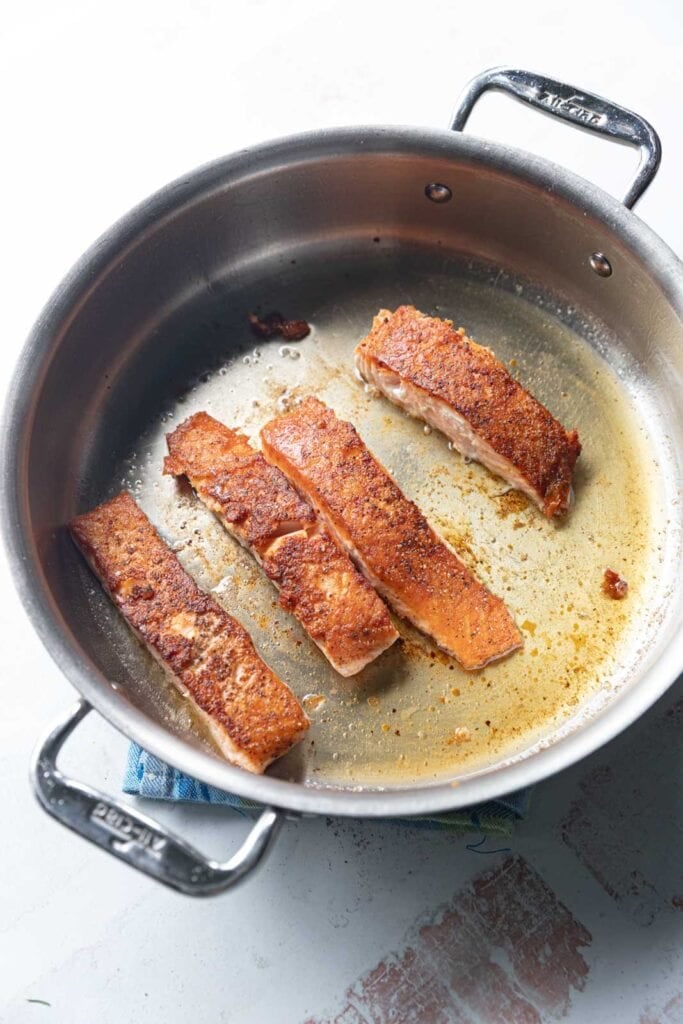
2. Pat the salmon completely dry, season, and sear in a screaming hot pan for 3-4 minutes without touching it. Flip, baste with foaming butter for 60-90 seconds, and rest for 2 minutes.
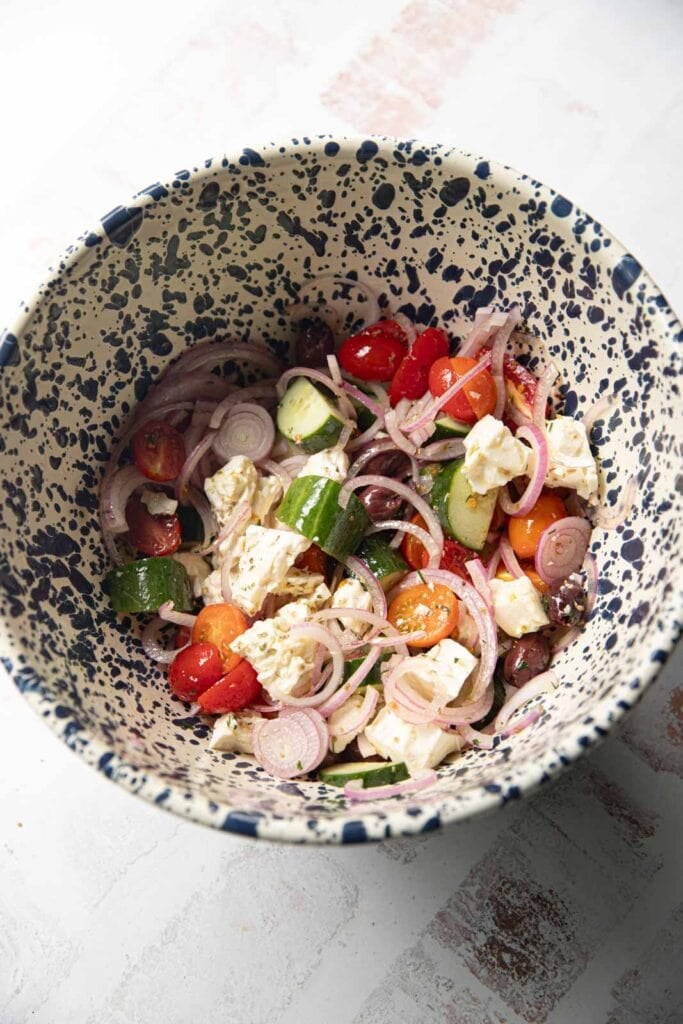
3. Soak the red onion in cold water for 10 minutes, drain, then toss with cucumber, tomatoes, olives, red wine vinegar, olive oil, oregano, salt, and pepper. Feta goes on at plating.
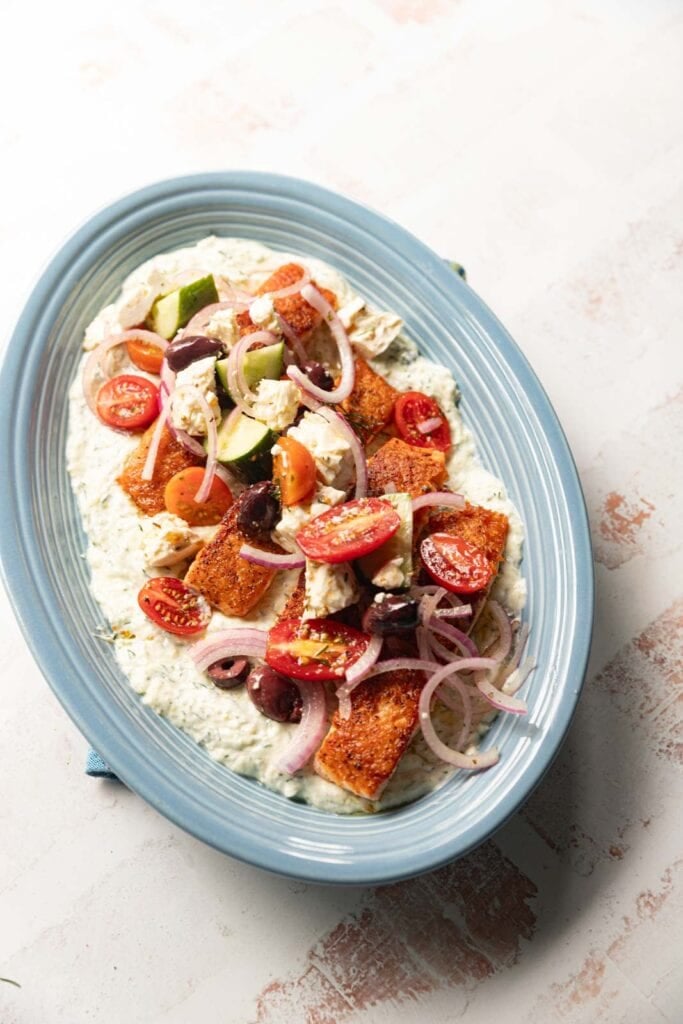
4. Smear the yogurt sauce across each plate, place the salmon crust-side up, spoon the salad alongside, lay a thick slab of feta on top, drizzle with olive oil, and serve immediately.
Did you try this recipe? I’d love to see it! Tag @alliehagerty on Instagram and leave a ⭐️⭐️⭐️⭐️⭐️ review below!
Seared Salmon with Dill Yogurt Sauce and Greek Salad
Equipment
- Large stainless or cast iron skillet
- box grater
- microplane
- large mixing bowl
- Small bowl (for soaking onion)
- Clean kitchen towel (for squeezing cucumber)
- Spoon (for basting)
- Paper towels
- Tongs or fish spatula
Ingredients
For the salmon
- 4 skinless salmon fillets 6–7 oz each, center-cut preferred
- 2 tablespoons avocado oil
- 1 tablespoon unsalted butter
- 1 teaspoon Kosher salt
- 1 teaspoon freshly ground black pepper
For the dill yogurt sauce
- 1 cup whole-milk Greek yogurt strained
- 1 medium Persian cucumber or ½ English cucumber
- 1 garlic clove
- ¼ cup fresh dill finely chopped
- 1 tablespoon good olive oil plus more for drizzling
- Zest of 1 lemon
- 1 tablespoon fresh lemon juice
- 1/2 teaspoon Kosher salt
- 1/2 teaspoon freshly ground black pepper
For the Greek salad
- 1 English cucumber cut into ¾-inch chunks
- 2 cups cherry tomatoes halved
- ½ small red onion thinly sliced
- ½ cup kalamata olives pitted
- 1 block 6–8 oz good feta in brine
- 1 tablespoon red wine vinegar
- 3 tablespoons good olive oil
- ½ teaspoon dried oregano
- 1/2 teaspoon Kosher salt
- 1/2 teaspoon freshly ground black pepper
- Lemon wedges to serve
Instructions
Make the yogurt sauce
- Grate the cucumber on the large holes of a box grater. Transfer to a clean kitchen towel and squeeze firmly over the sink until most of the water is gone — a watery sauce will pool instead of smear.1 medium Persian cucumber
- Grate the garlic clove on a microplane directly into a medium bowl. Add the strained yogurt, squeezed cucumber, chopped dill, and olive oil. Stir to combine. Season well with kosher salt and pepper. Taste and adjust.1 cup whole-milk Greek yogurt, 1 medium Persian cucumber, 1 garlic clove, ¼ cup fresh dill, 1 tablespoon good olive oil, 1/2 teaspoon Kosher salt, 1/2 teaspoon freshly ground black pepper
- Add the lemon zest and lemon juice just before serving. Stir once more and taste again. The sauce should be bright, garlicky in the background, and deeply herby. Set aside at room temperature if using within 30 minutes, or refrigerate and bring back to room temp before plating.Zest of 1 lemon, 1 tablespoon fresh lemon juice
Make the Greek salad
- Soak the sliced red onion in a small bowl of cold water for 10 minutes, then drain and pat dry. This takes the raw bite off without losing the sharpness.½ small red onion
- Combine the cucumber, cherry tomatoes, drained red onion, and kalamata olives in a large bowl. Drizzle with red wine vinegar and olive oil. Sprinkle with dried oregano, a pinch of kosher salt, and a few grinds of black pepper. Toss gently to coat. Taste and adjust — the salad needs to hold its own against both the salmon and the yogurt sauce, so season with confidence.1 English cucumber, 2 cups cherry tomatoes, ½ cup kalamata olives, 1 tablespoon red wine vinegar, 3 tablespoons good olive oil, ½ teaspoon dried oregano
- Set the salad aside. Don’t add the feta yet — it goes on at plating, as a slab.
Sear the salmon
- Pat the salmon fillets completely dry with paper towels — both sides, thoroughly. Season generously on both sides with kosher salt and black pepper. Let them sit at room temperature for 15 minutes. Cold fish hitting a hot pan drops the pan temperature and slows the sear.4 skinless salmon fillets, 1 teaspoon Kosher salt, 1 teaspoon freshly ground black pepper
- Heat avocado oil in a large stainless or cast iron skillet over high heat until the oil is shimmering and just beginning to smoke. The pan needs to be properly hot — a pan that isn’t will cause the fish to stick and steam rather than sear.2 tablespoons avocado oil
- Place the fillets in the pan presentation-side down. Press each fillet gently but firmly for the first 20–30 seconds to ensure full contact with the pan — skinless fillets will try to curl as the proteins contract. Don’t move them after that. Cook for 3–4 minutes until a deep golden crust has formed and the flesh has turned opaque about halfway up the side of the fillet.
- Add the butter to the pan. It will foam immediately. Flip the fillets carefully, then tilt the pan slightly and use a spoon to continuously baste the top of each fillet with the foaming butter for 60–90 seconds. The salmon is done when it’s opaque all the way through and just barely flakes at the thickest point when pressed. Pull it from the pan and rest for 2 minutes before plating.1 tablespoon unsalted butter
Plate and serve
- Spoon a generous amount of yogurt sauce onto each plate and use the back of the spoon to smear it across most of the surface.
- Place a salmon fillet crust-side up on the yogurt smear, centered on the plate.
- Spoon the Greek salad around and alongside the salmon — let it tumble naturally against the fish. Lay a thick slab of feta over the salad. Drizzle everything lightly with olive oil. Add a lemon wedge and serve immediately.1 block, Lemon wedges
Notes
- Patience is everything when searing salmon. Don’t touch it, don’t move it, don’t peek! The crust forms, then it lifts naturally and flips without sticking. Give it time and it will reward you!
- Dry the salmon completely. Both sides, thoroughly, right before it goes in the pan. Any surface moisture means steam and steam means no crust; this is the single most important step.
- Don’t crumble the feta. Buy a block packed in brine and either serve it as a thick slab or fork it into big rustic chunks like I did for this photo; either way it should be substantial and creamy, never the dry pre-crumbled stuff from a bag. That’s a completely different ingredient and it shows!
- Make the yogurt sauce ahead. It can be made up to 4 hours ahead; just hold the lemon zest and juice until right before serving to keep it bright and fresh.
- Rest the salmon for 2 minutes after pulling it from the pan. Carry-over heat finishes the cook and the juices redistribute. Don’t skip this; it makes a real difference!
- Storage: Salmon is best eaten the day it’s made. If you have leftovers, reheat the salmon gently in a 275°F oven for about 10 minutes until just warmed through; high heat will dry it out fast so low and slow is the move. The yogurt sauce keeps refrigerated for up to 2 days; re-stir before serving and add a fresh squeeze of lemon. Store the feta separately in its brine.