
Seared and Slow Roasted Salmon with Spring Risotto


Risotto and Salmon are two things I make more than almost anything else in my kitchen, so at some point, putting them on the same plate was inevitable. The salmon sears over high heat for a golden crust, then finishes low and slow in the oven at 250°F while you stir the risotto. Jammy leeks, bright asparagus, sweet peas, real Parmigiano-Reggiano. One hour, one serious dinner.
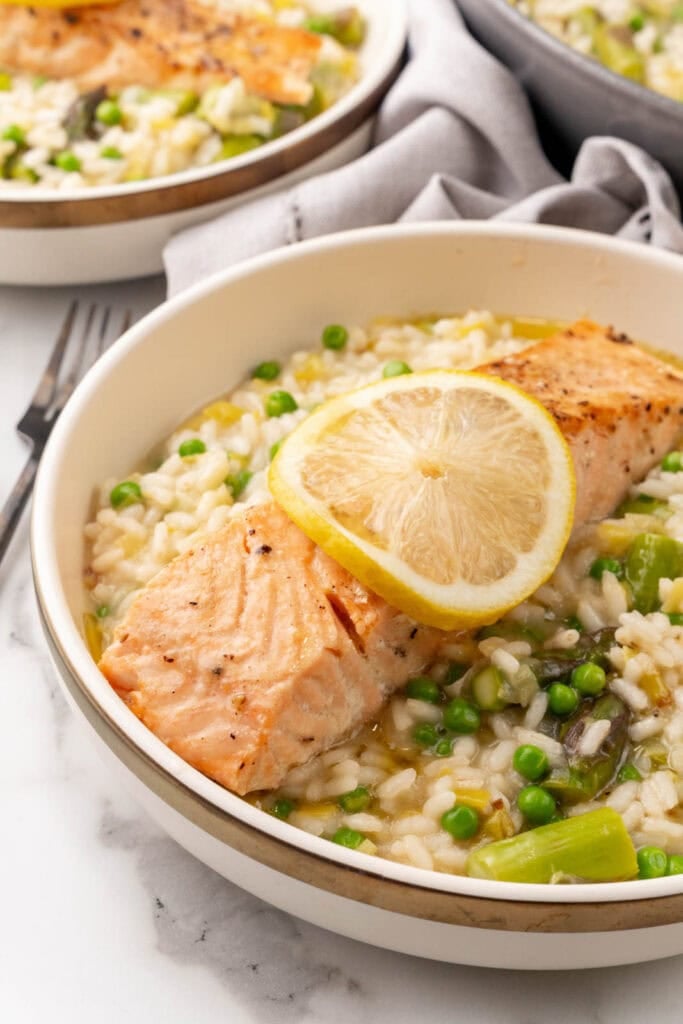
Risotto is something I could make blindfolded at this point. We eat it for dinner pretty frequently, and if you spend any time exploring my recipes, you will notice we have a lot of risotto recipes. When Charlotte was little, risotto and salmon were on heavy rotation; soft, easy, and something she would actually finish. She still loves both, and honestly, so do I. If you are new to risotto, my Skillet Baked Salmon with Coconut Lime Rice and Baked Salmon and Potatoes with Patatas Bravas Sauce, and Salmon with Dill Yogurt Sauce are three other salmon dinners worth bookmarking while you’re here.
Ingredients Notes
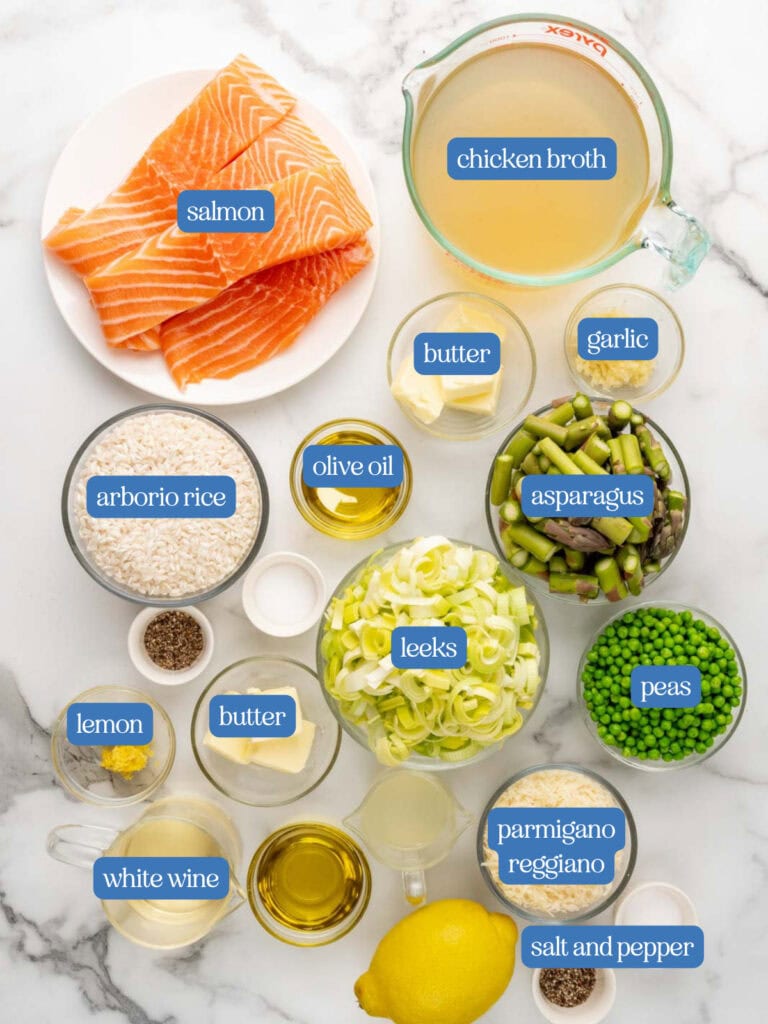
I prefer skinless salmon for this recipe because I like to serve it right on top of the spring risotto. As far as wild versus farmed goes: totally up to you! The most important thing, however, is picking uniform fillets at the fish counter. Try to make sure they are as close in weight and thickness as possible for even cooking. As for the Parmigiano-Reggiano, grate it yourself. I love using a microplane for this because it gives you really small, tight ribbons that melt into the risotto perfectly; plus, a microplane is so much smaller and more versatile than a big box grater.
A Few Testing Notes:
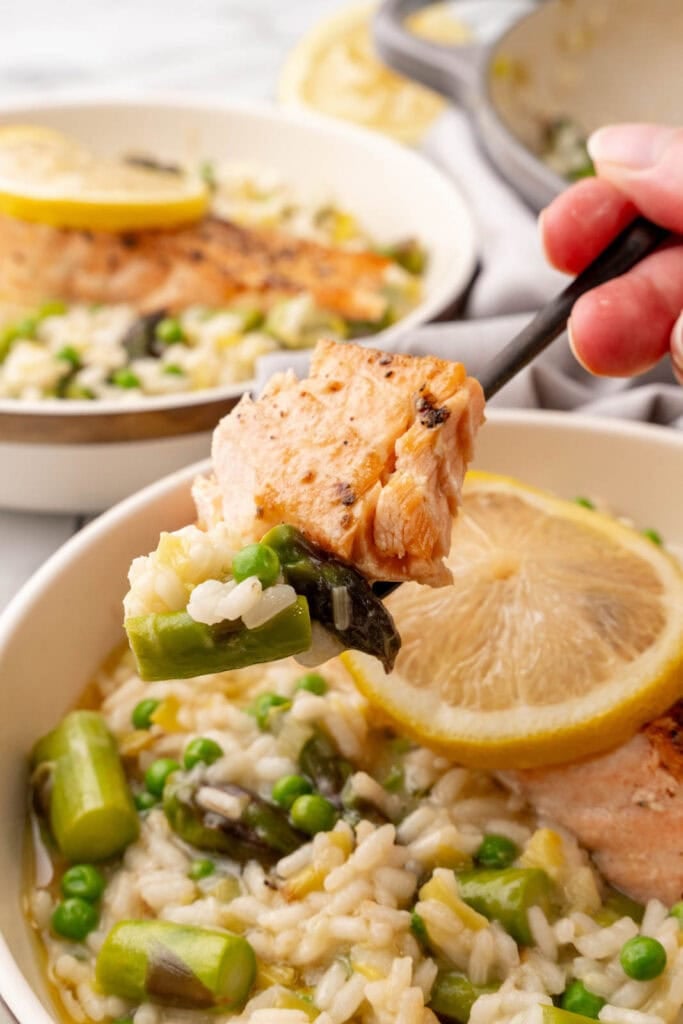
The first thing I tested was skipping the sear on the salmon entirely and going straight into the low oven. I didn’t love it. Without that initial sear, the salmon lacked the golden crust that makes this dish feel complete. The sear also does some of the cooking work upfront, which is part of why the lower oven temp works so well here. The other thing I noticed when developing this recipe: a lot of spring risotto recipes add the peas way too early. Peas need almost no time at all. Add them with the final ladle of stock and cook for just one minute; they should be bright, sweet, and just warmed through. Overcooked peas turn dull and mushy, completely losing their sweetness.
How to Make Risotto with Salmon
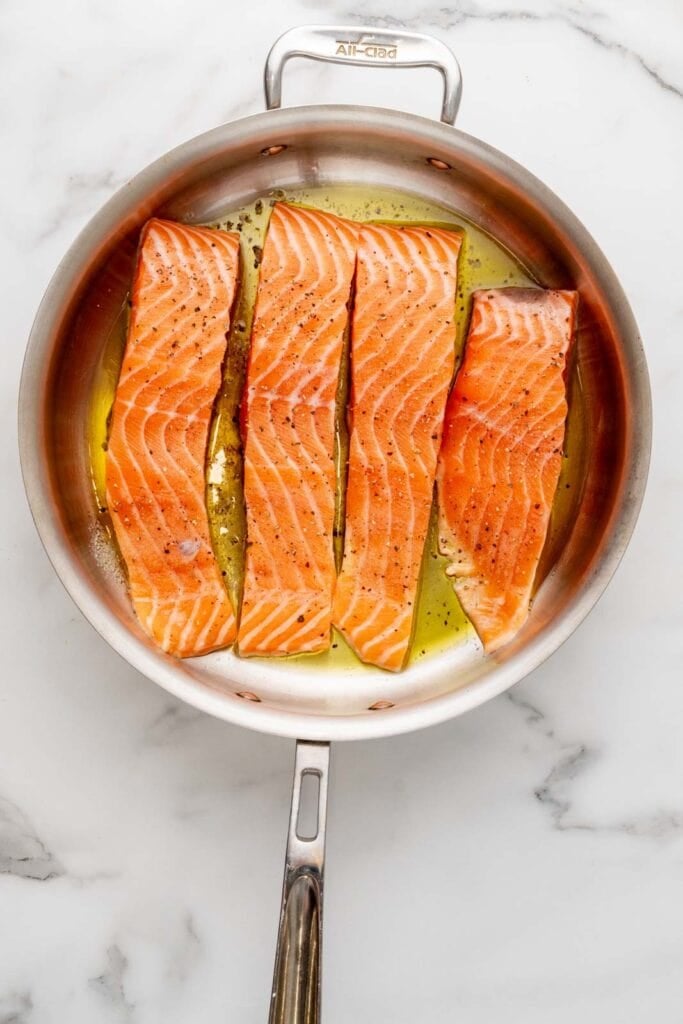
- Heat an oven-safe skillet over medium-high heat with olive oil. Season the salmon generously, sear flesh-side down for 4 to 5 minutes until deep golden — don’t touch them, they’ll release naturally when ready.
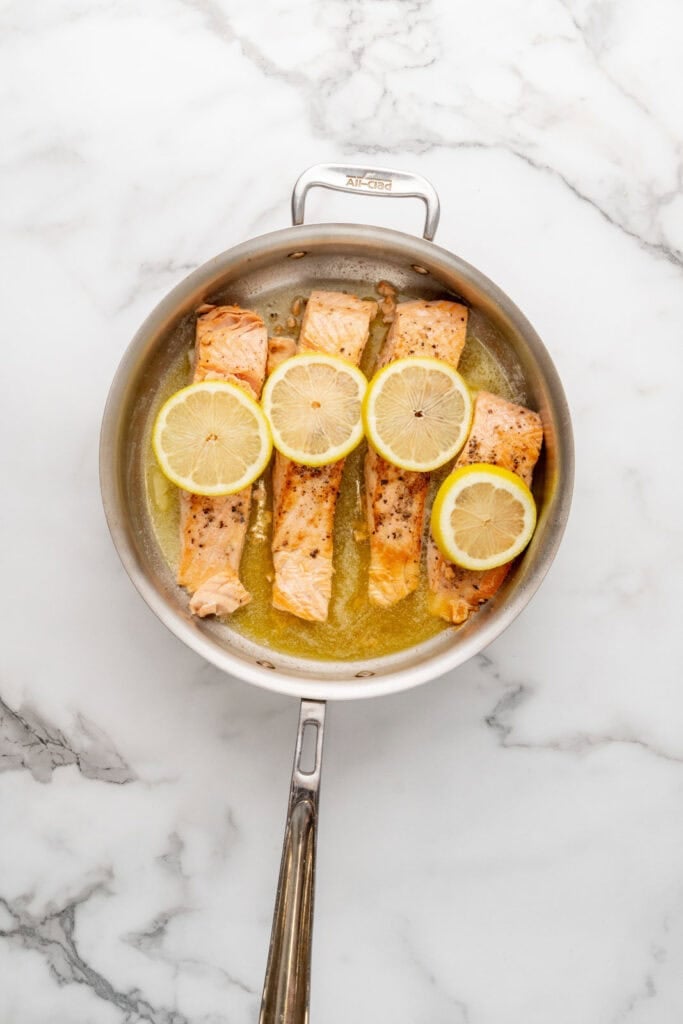
2. Flip once, sear the bottom for 30 seconds, then flip back flesh-side up. Add butter, baste for 1 minute, lay lemon slices on top, and transfer to a 250°F oven for 20 to 25 minutes.
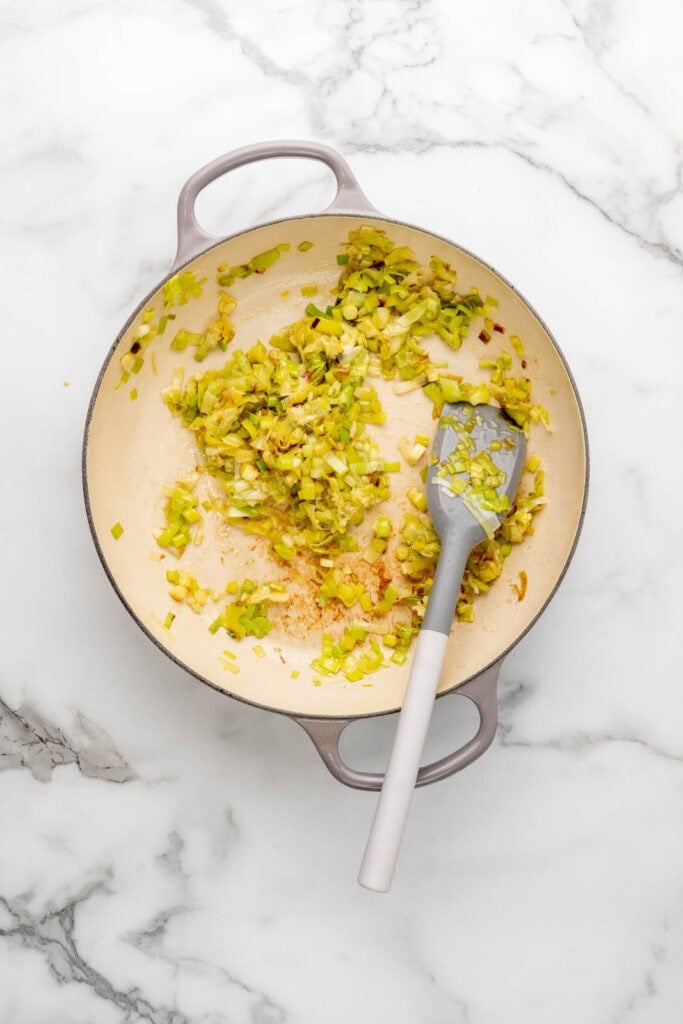
3. Warm olive oil and butter in a Dutch oven, add the leeks with a pinch of salt, and cook for 8 to 10 minutes until completely soft and jammy. Add the garlic and cook for 1 minute.
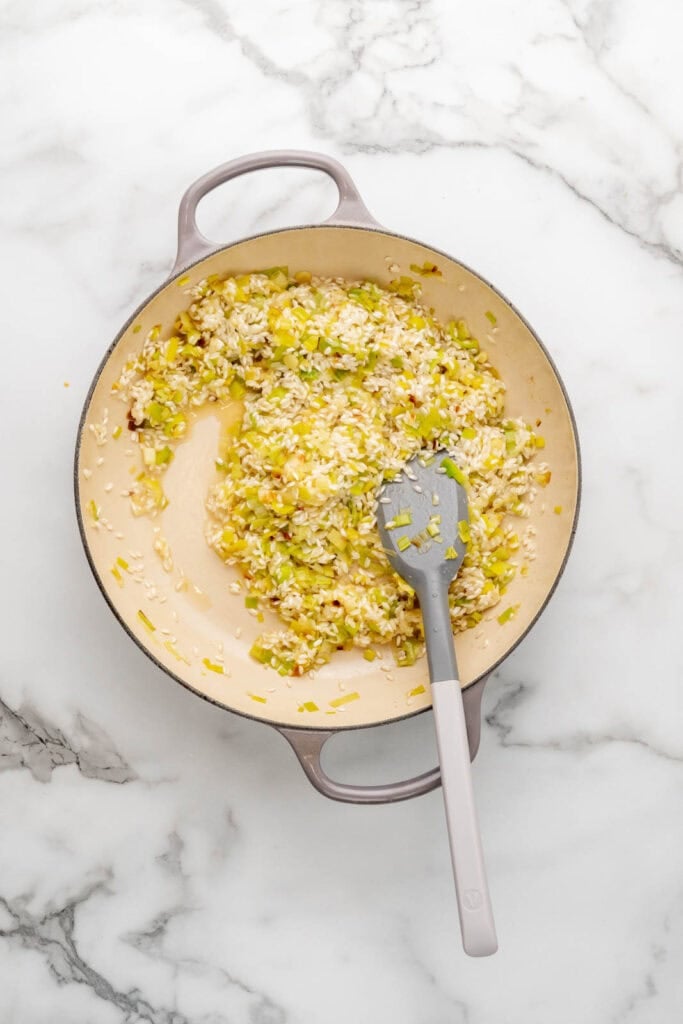
4. Add the arborio rice and toast for 2 minutes until the edges look translucent, then pour in the wine and stir until fully absorbed.
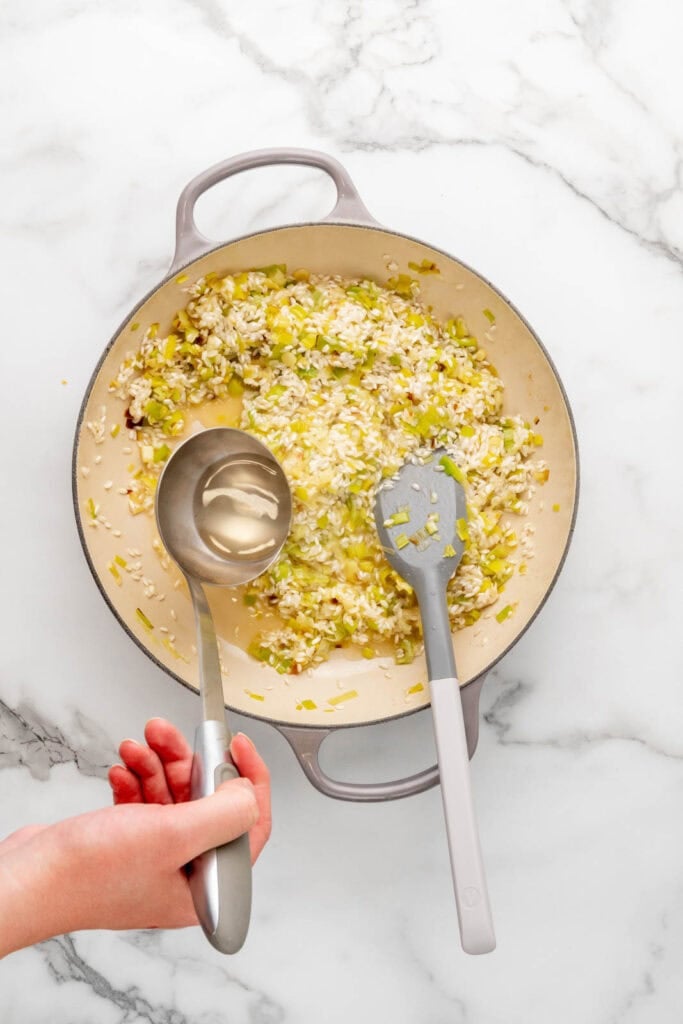
5. Add warm stock one ladle at a time, stirring frequently and waiting until each addition is almost absorbed before adding the next — this takes 18 to 22 minutes.
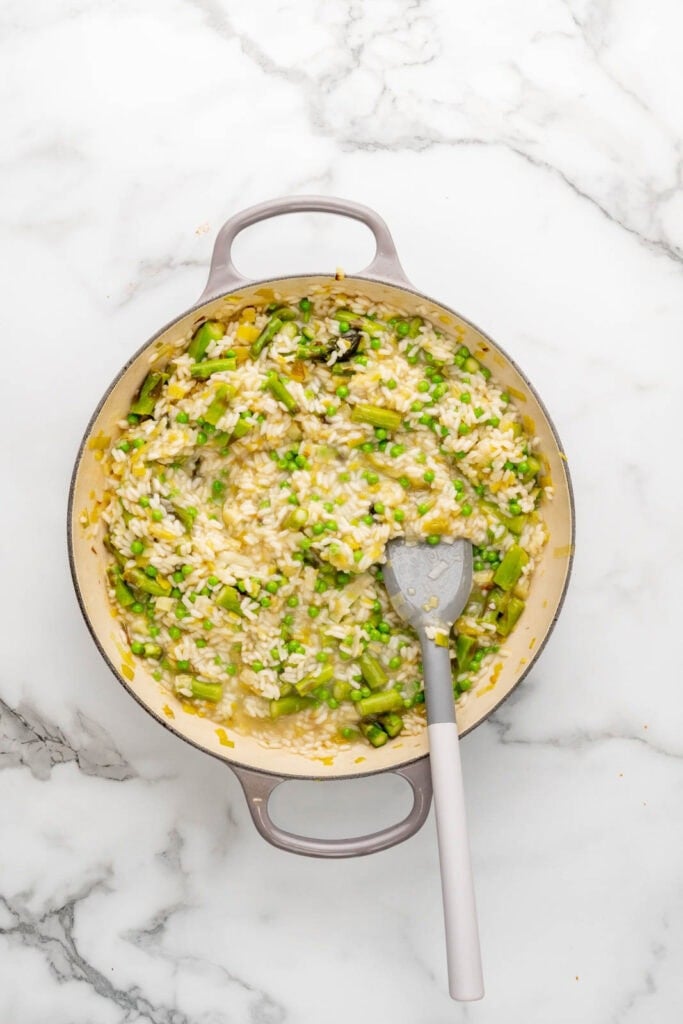
6. Add the asparagus with 2 ladles of stock remaining, then stir in the peas with the final ladle and cook for just 1 minute.
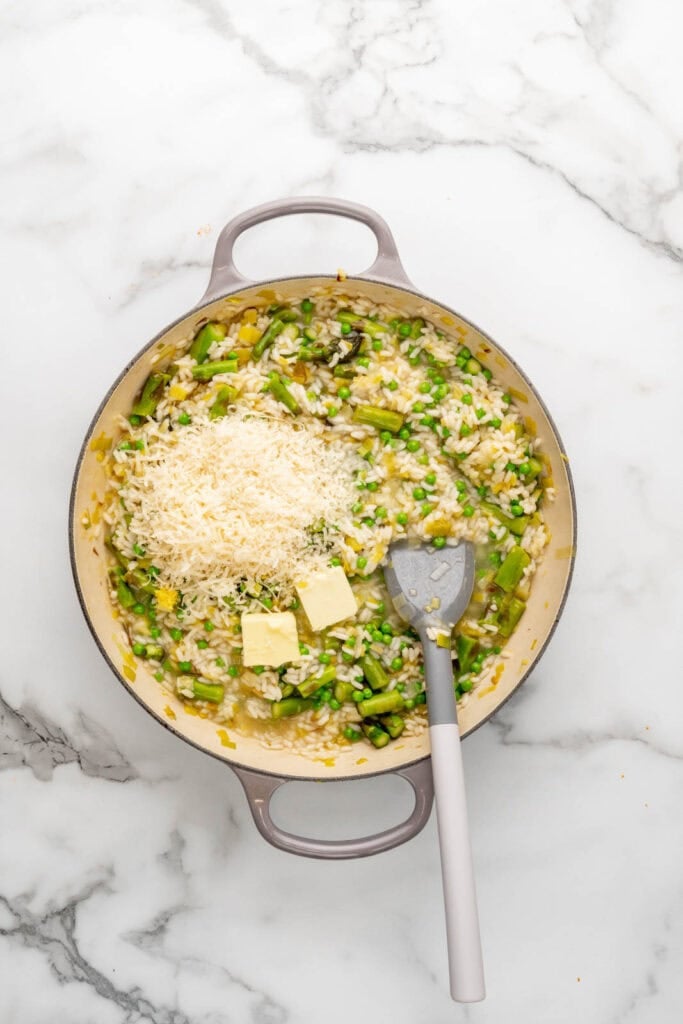
7. Pull off the heat and stir in cold butter, Parmigiano-Reggiano, lemon zest, and lemon juice until the risotto is glossy and flowing.
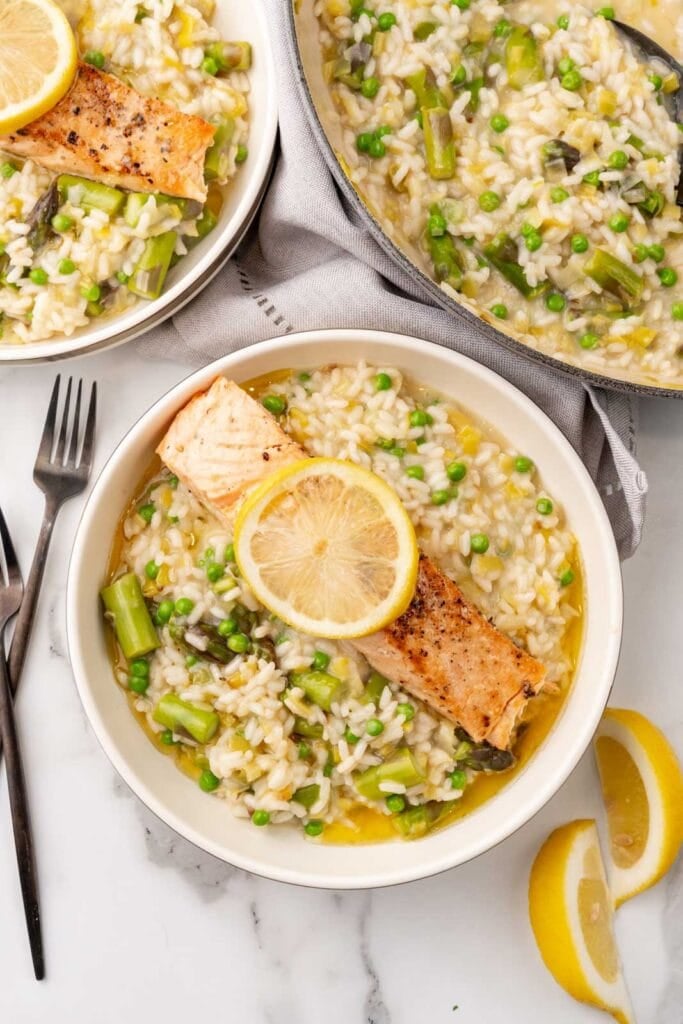
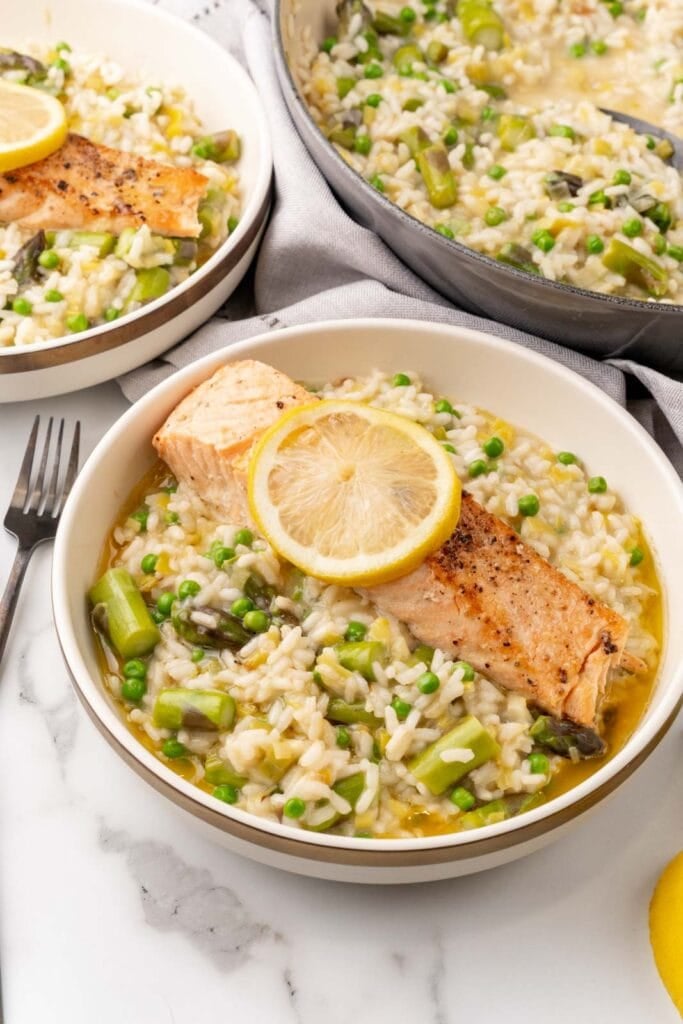
8. Squeeze lemon into the salmon pan, spoon the buttery juices over each fillet, and serve over the risotto with extra Parmigiano-Reggiano.
Did you try this recipe? I’d love to see it! Tag @alliehagerty on Instagram and leave a ⭐️⭐️⭐️⭐️⭐️ review below!
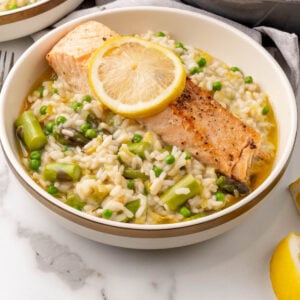
Seared and Slow Roasted Salmon with Spring Risotto
Equipment
- Large, heavy-bottomed pot or Dutch oven
- Medium saucepan
- Oven-safe skillet
- ladle
- Microplane or box grater
- instant read thermometer
Ingredients
For the salmon
- 4 skinless salmon fillets about 6 ounces each, patted dry
- 2 tablespoons olive oil
- 1½ teaspoons kosher salt
- ¾ teaspoon black pepper
- 3 tablespoons unsalted butter
- 1 lemon half thinly sliced and half reserved for finishing
For the risotto
- 5 cups chicken or vegetable stock plus more if needed
- 2 tablespoons olive oil
- 4 tablespoons unsalted butter divided
- 2 medium leeks white and light green parts only, halved and thinly sliced
- 3 garlic cloves minced
- 1½ cups arborio rice
- ½ cup dry white wine such as Pinot Grigio or unoaked Chardonnay
- 1 bunch medium asparagus tough ends removed, cut into 1-inch pieces
- 1 cup fresh or frozen peas
- 1 lemon zested and juiced to yield 2 tablespoons
- 1 cup Parmigiano-Reggiano finely grated, plus more for serving
- 1½ teaspoons kosher salt plus more to taste
- ½ teaspoon black pepper plus more to taste
Instructions
- Preheat the oven to 250 degrees Fahrenheit (120°C) and place serving bowls or plates inside to warm. Heat an oven-safe skillet over medium-high heat and add the olive oil. Season the salmon fillets generously on both sides with salt and pepper. Once the oil is shimmering, place the fillets flesh-side down and sear without touching them for 4 to 5 minutes — they will release naturally from the pan when the crust is ready, deep golden across the entire surface.
- Flip once and sear the flat bottom side for just 30 seconds, then flip back flesh-side up and reduce the heat to medium. Add the butter and let it foam. Tilt the pan slightly and baste the butter continuously over the flesh for about 1 minute.
- Lay the lemon slices over the top of each fillet and transfer the skillet to the oven. Roast for 20 to 25 minutes, until an instant-read thermometer inserted into the thickest part reads 125 degrees Fahrenheit (52°C) and the flesh is just opaque and slightly custardy at the center. Start the risotto now.
- Pour the stock into a medium saucepan and bring to a gentle simmer over low heat. Keep it warm on a back burner for the duration of the risotto — cold stock added to a hot pot stalls the cooking and throws off the whole rhythm.
- In the Dutch oven, warm the olive oil and 2 tablespoons of butter over medium heat. Add the leeks with a generous pinch of salt and cook, stirring occasionally, for 8 to 10 minutes until completely melted, jammy, and just beginning to turn golden at the edges.
- Add the garlic and cook for about 1 minute until fragrant. Add the arborio rice and stir to coat every grain in the fat. Toast for about 2 minutes, until the grains look translucent at the edges and you hear a faint crackling sound against the pot. Pour in the wine and stir until fully absorbed.
- Add the warm stock one ladleful at a time, stirring frequently and waiting until each addition is almost fully absorbed before adding the next — the bottom of the pot should be just barely visible. Keep a gentle, active bubble throughout. This will take 18 to 22 minutes total.
- With about 2 ladles of stock remaining, add the asparagus and continue cooking for 3 to 4 minutes until the spears are bright green and bend without snapping. Stir in the peas with the final ladle of stock and cook for 1 more minute, until just warmed through and still vivid.
- Pull the pot off the heat. Add the remaining 2 tablespoons of cold butter, the Parmigiano-Reggiano, lemon zest, and lemon juice and stir vigorously for about a minute until the risotto is glossy and flowing. Pull it slightly looser than you think you need — it will tighten on the plate. Taste and season aggressively with salt and pepper.
- When the salmon comes out of the oven, remove the lemon slices and squeeze the reserved lemon half directly into the hot pan. The butter will bubble up immediately — spoon it over each fillet until every piece is glossy and coated.
- Pull the warmed bowls from the oven, spoon in the risotto, and set a salmon fillet ontop. Spoon any remaining pan butter over the top, finish with extra Parmigiano-Reggiano, and serve immediately.